Authors
Peter SigeiExercises kit’s authors
Peter SigeiPublisher
Included in packages
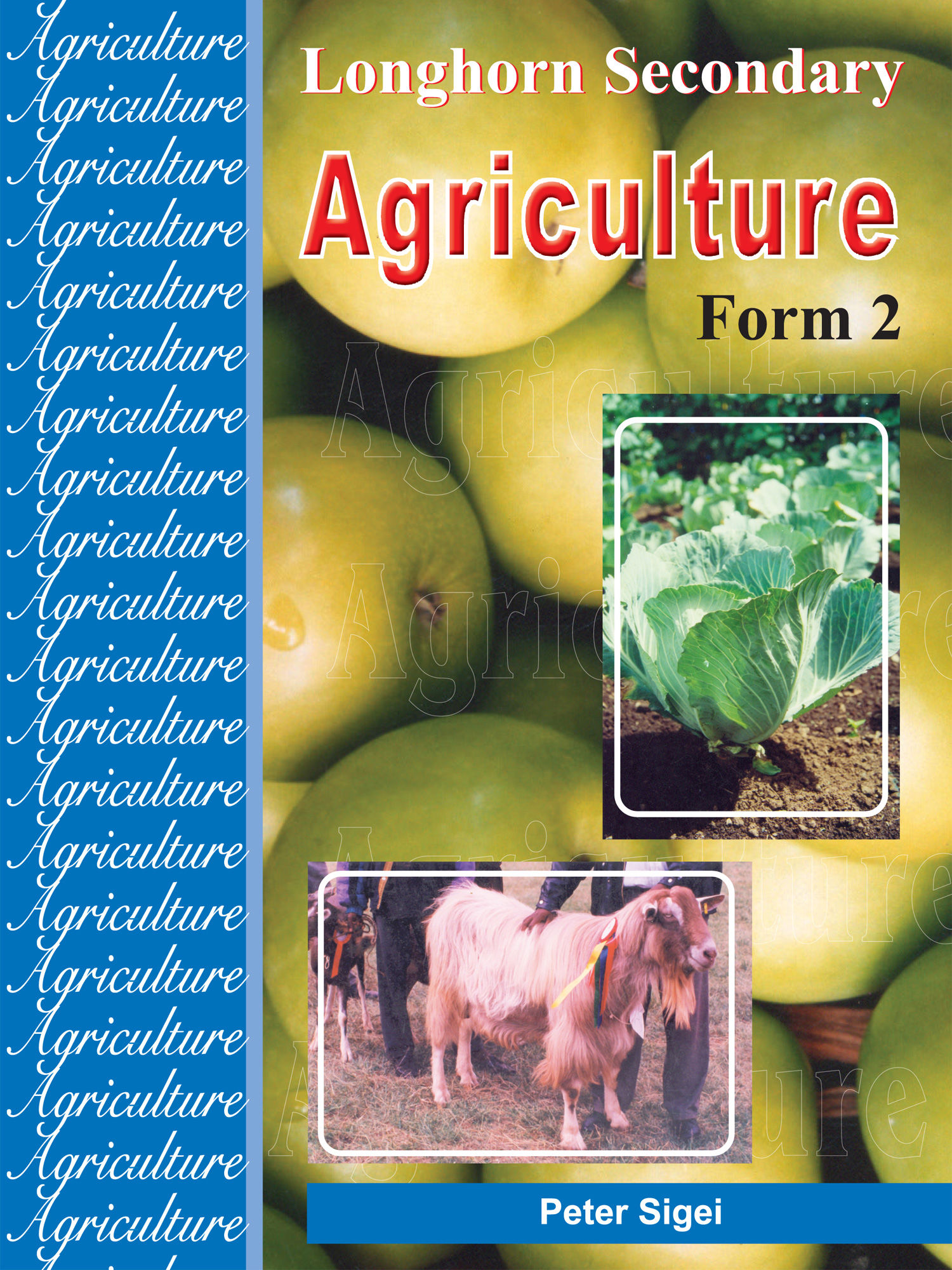
Longhorn Secondary Agriculture Form 2 is a new course that comprehensively covers and fulfils all the goals and targets of the new syllabus. The course underscores the crucial role agriculture plays as the mainstay of Kenya's economy and is uniquely designed to promote the best agricultural production principles and the responsible application of the latest environmentally sound technological advancements, giving it a competitive edge.
Other key features include: use of simple language with clarity, which is appropriate to the level of the learner.
• presentation of content sequentially and in well-organised topics.
• use of numerous illustrations.
• practical activities for further investigation.
• revision questions to reinforce the understanding of agricultural principles and concepts. a comprehensive teacher's guide, providing, among other things, guidelines on how to teach the various concepts and answers to revision questions.
Peter Sigel is an experienced secondary school teacher and senior examiner of Agriculture with the Kenya National Examinations Council.
His work has been moderated and improved through the team effort of syllabus specialists and examiners led by Joseph Gachagua, Julius Mailu, Daniel Cheruiyot and David Mwangi among others.
1. Soil Fertility II (Inorganic fertilizers)
Lead |
Chapter |
|---|---|
| 1.1. |
Soil Fertility
Free chapter! |
| 1.2. | The essential elements (1). Macronutrients |
| 1.3. | The essential elements (2). Micronutrients |
| 1.4. | Inorganic fertilisers |
| 1.5. | Compound fertilizers |
| 1.6. | Soil sampling |
| 1.7. | Practical activities. |
2. Crop Production II (Planting)
Lead |
Chapter |
|---|---|
| 2.1. | Crop Production: Planting |
| 2.2. | Planting: Type and selection of planting materials |
| 2.3. | Preparation of planting materials |
| 2.4. | Planting |
| 2.5. | Plant population |
| 2.6. | Practical Activities |
3. Crop production III (Nursery practices)
Lead |
Chapter |
|---|---|
| 3.1. | Crop production: Nursery practices |
| 3.2. | Nursery bed |
| 3.3. | Tea stem cuttings and seedlings |
| 3.4. | Grafting |
| 3.5. | Budding |
| 3.6. | Layering and Tissue culture for crop propagation |
| 3.7. | Transplanting of vegetable seedlings from nursery to seedbed |
| 3.8. | Practical Activities |
4. Crop Production IV (Field practices)
Lead |
Chapter |
|---|---|
| 4.1. | Crop Production: Field practices |
| 4.2. | Crop Rotation |
| 4.3. | Mulching |
| 4.4. | Terms used in crop production |
| 4.5. | Routine field practices (1) |
| 4.6. | Routine field practices (2) |
| 4.7. | Crop protection |
| 4.8. | Harvesting of crops |
| 4.9. | Storage |
| 4.10. | Practical Activities |
5. Crop production V (vegetables)
Lead |
Chapter |
|---|---|
| 5.1. | Crop production: Vegetables |
| 5.2. | Cabbage (Brassica oleraceae) |
| 5.3. | Tomato (Lycopersicon esculentum) |
| 5.4. | Carrots (Daucus carota) |
| 5.5. | Onion (Allium cepa) |
| 5.6. | Practical Activities |
6. Livestock Health I
Lead |
Chapter |
|---|---|
| 6.1. | Livestock Health I |
| 6.2. | Health and Diseases |
| 6.3. | General methods of disease control |
| 6.4. | Appropriate methods of handling livestock |
| 6.5. | Practical Activities |
7. Livestock Health II (Parasites)
Lead |
Chapter |
|---|---|
| 7.1. | Livestock Health: Parasites |
| 7.2. | Parasites: External parasites (1) |
| 7.3. | Parasites: External parasites (2) |
| 7.4. | Internal parasites |
| 7.5. | Practical Activities |
8. Livestock Production II (Nutrition)
Lead |
Chapter |
|---|---|
| 8.1. | Livestock Production: Nutrition |
| 8.2. | Nutritional requirements of livestock (1) |
| 8.3. | Nutritional requirements of livestock (2) |
| 8.4. | Macro-nutrients |
| 8.5. | Micro-nutrients (1) |
| 8.6. | Micro-nutrients (2) |
| 8.7. | Feeds and feedstuffs |
| 8.8. | Rationing of feeds |
| 8.9. | Feeding(1) |
| 8.10. | Feeding(2) |
| 8.11. | Practical Activities |
-
The study kit contains 58 chapters and 92 exercises of which 92 are in the chapters and 0 in the exercise stack.
-
Authors
Peter Sigei -
Exercises kit’s authors
Peter Sigei -
Subject
Agriculture -
Grade
Form 2 -
Kit's language
English -
Publisher
Longhorn Publishers -
Included in packages