Fungi

Get started

Fungi are living organisms found in our environment. They vary in shape and size, from tiny moulds on bread to large mushrooms in forests. Despite their small or simple appearance, fungi play an important role in nature and in our daily lives.

In this section, you will explore the different types of fungi around us, understand their role in nature and learn why they are important to the economy. This will help you understand that fungi contribute significantly to the environment in nature.
A. Common fungi in the environment

What are the common fungi found in our environment?

Activity 1: To identify common fungi in the environment

What you need

Pictures of different types of fungi.

Discover by observing and discussing: Work in Groups

Grade 6 learners from Masomo Primary School searched for information on fungi and made notes in their exercise books. The following extract shows some of the findings that they wrote. Read and discuss it.

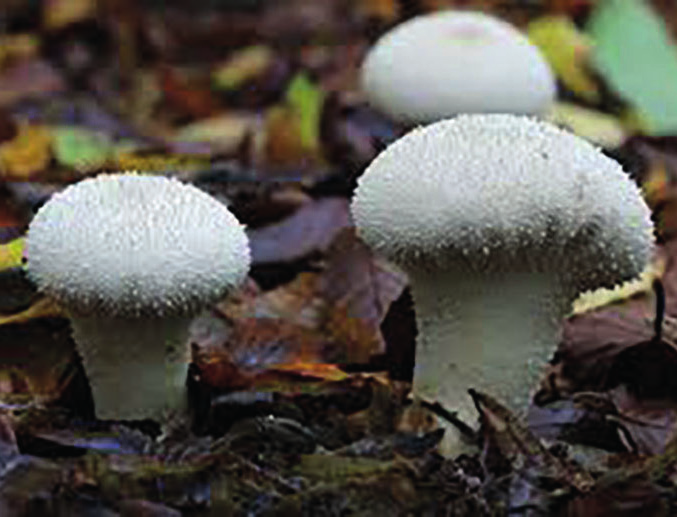
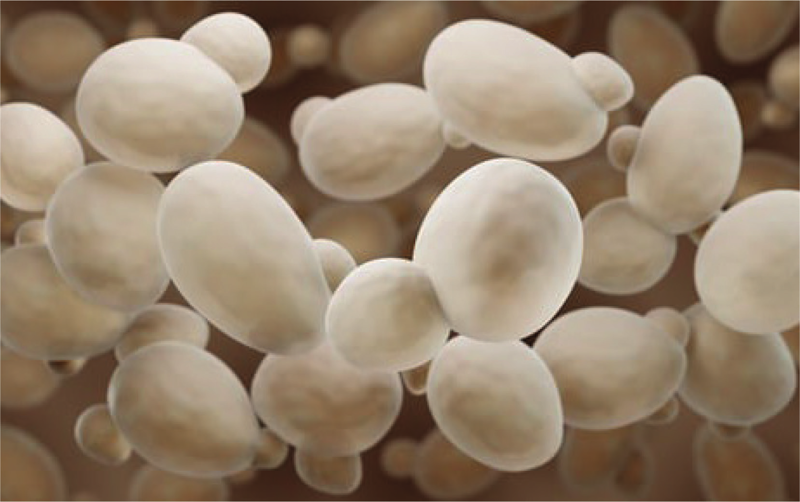
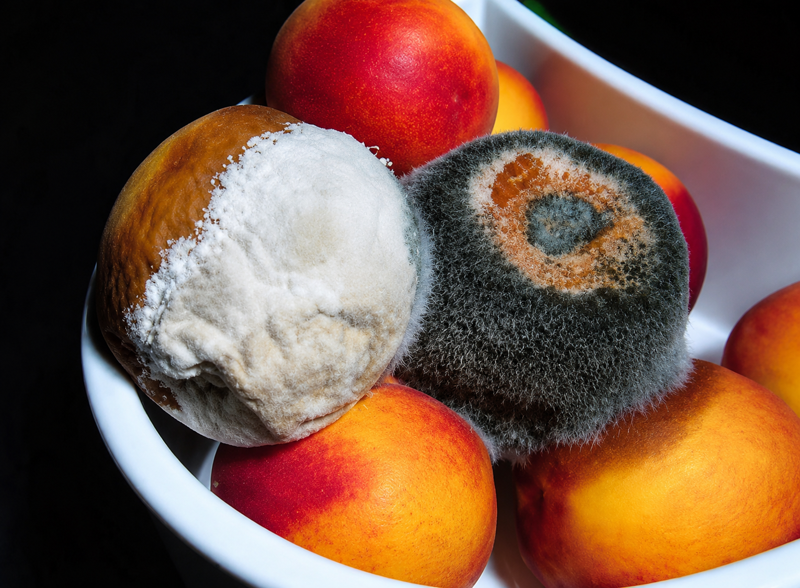
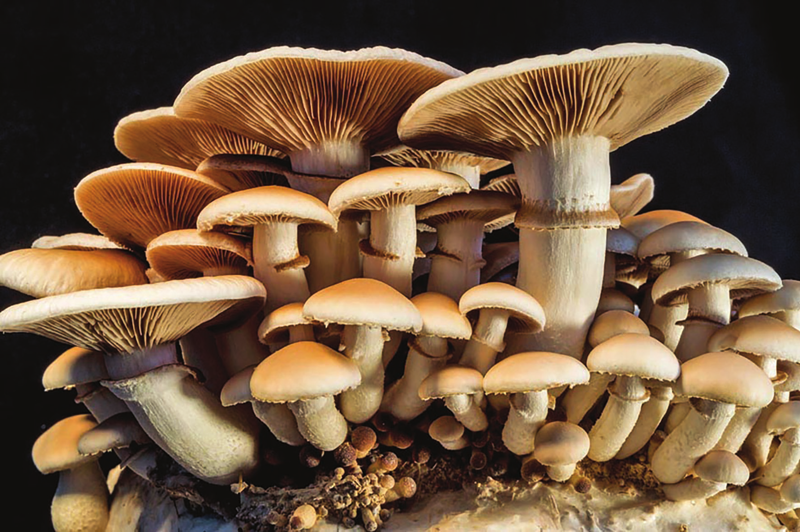
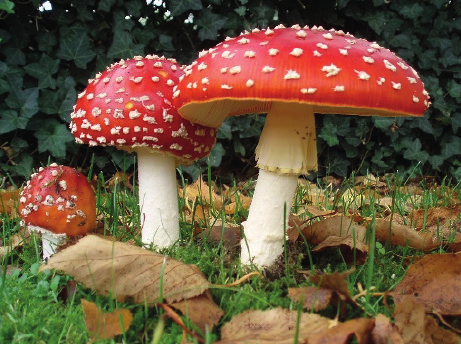
Fungi are living things. They include mushrooms, toadstools, puffballs, yeast and moulds. The pictures of the common fungi are in Figure 1.

Fungi grow in places like soil, spoilt food, on plants and decaying matter. They do not make their own food like plants. Instead, they obtain nutrients by breaking down dead organic matter. They live on plants or animals. Mushrooms often resemble umbrellas and come in various colours. They can be found in gardens and forests. Toadstools look similar to mushrooms but are often more colourful and can be poisonous. Puffballs are round or pear-shaped fungi, usually white or grey, that release spores when they mature. They are commonly found in fields and forests. Yeast is a very small fungi commonly used in baking and fermentation. It is often found on fruits or in sugary environments. Moulds commonly grow as green, blue or black soft patches on decaying food and damp surfaces.

  1. Share your experience on the common fungi you have come across in your environment.
  2. Discuss the key features of the common fungi including their shapes, colours, sizes and where they can be found.
  3. Share your findings on common fungi in the environment to your class members for discussion.
Mushrooms
Toadstools
Puffballs
Magnified yeast
Mould on apples
Figure 1: Common fungi in the environment

Safety tip

Do not touch or eat any fungi you find, as some can be poisonous.

What you need

A magnifying glass, digital device, science textbook, a container for collecting samples and drawing materials.

Discover by observing: Work in Groups
  1. Take a walk around the school compound and nearby environment to observe common fungi.
  2. Record the fungi like mushrooms, toadstools, puffballs or moulds that you identify in the environment. Note where you found them, their appearance and any unique features. 
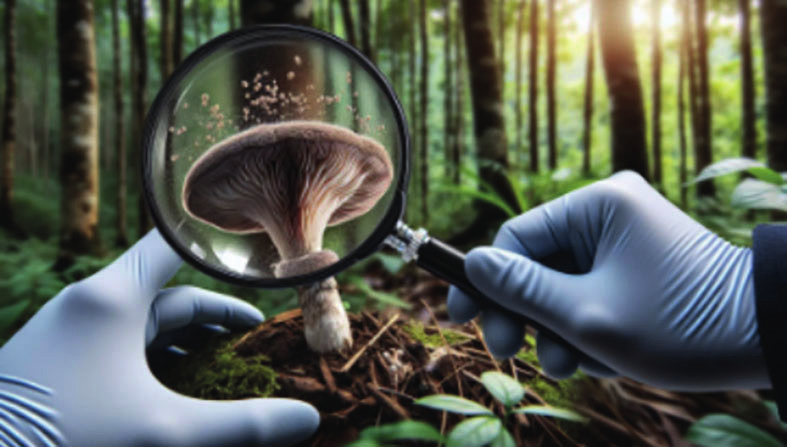
  3. Use a magnifying glass to closely observe the fungi as shown in the picture in Figure 2. You can take photographs of each type observed.
  4. Use a digital device with internet access or science textbook to search for images of common fungi. Identify the fungi you found using the descriptions below:
    1. They grow on food like ugali or bread and are black, green or blue.
    2. They are round or pear-shaped and those that are mature release a cloud of spores when touched.
    3. They look like an umbrella but are not colourful.
    4. They look like an umbrella but they are colourful and have spots.
    5. They grow on the bark of trees.
  5. Create a detailed presentation summarising the findings on fungi in the school environment. Include diagrams, photographs and descriptions of the observed fungi.
Figure 2: A magnifying glass

Did you discover?

Mould

Mould is a type of fungi that grows on spoiled food. It appears hairy and is usually grey or black. Mould feeds on food to grow, spreading quickly and making the food unsafe to eat.

Puffballs

Puffballs are round fungi that grow on the ground, usually in forests. When young, they are white and soft. As they age, they turn brown and release a cloud of spores when touched.

Yeast

Yeast is a tiny fungus that is too small to see without a microscope. It is used to make dough rise and give it a soft texture. Yeast eats sugar and produces gas which makes dough puff up when used for baking.

Mushrooms

Mushrooms are fungi that grow on the ground or on trees. They have a stem and a cap which come in various shapes and colours. While some mushrooms are safe to eat, others can be poisonous.

Toadstools

Toadstools resemble mushrooms but are often poisonous. They can be colourful and may have spots on their caps. It is important not to touch or eat toadstools as they can be poisonous.

  1. How can you identify the different types of fungi in your environment?
  • By observing their shape, colour, size, and where they grow.
  • By tasting them to find out which ones are edible.
  • By checking whether insects are eating them.
  • By smelling them.
  1. What are some common places where fungi grow and why?
  • Damp soil
  • Rotten food
  • Wet wood
  • Dry metal surfaces
  1. Sort these statements into cultivated edible mushrooms and unidentified wild mushrooms.
      • Grown for food by farmers
      • Should not be picked for eating without expert identification
      • May appear in fields, gardens or near trees
      • Can be bought from a trusted food seller
      • Harvested and sold as food
      • Cannot be judged safe by cap colour alone
      1. Why is it important not to touch or eat some of the fungi found in the environment?
      • They may be poisonous and can make people sick.
      • Touching any fungus makes it grow faster.
      • Fungi are dangerous because they always have sharp spines.
      • Fungi can only be harmful during the rainy season.
      1. In what ways are yeast different from other types of fungi?
          • Can usually be seen with the naked eye
          • Single-celled
          • Help decompose dead matter
          • Used in baking and brewing
          • Multicellular
          • Cannot be seen clearly without a microscope
          • Reproduce mainly by spores
          • Reproduce mainly by budding

          B. The importance of fungi in nature

          What is the importance of fungi in nature?

          Safety tip

          Always wear gloves when handling food that has mould. Wash your hands thoroughly after the activity and never eat food that has mould.

          What you need

          A slice of bread or a piece of fruit, a moist paper towel, a clear plastic bag or container and a digital device.

          Discover by doing: Work in Groups
          1. Place the slice of bread or the piece of fruit on a moist paper towel and put it in a clear plastic bag or container.
          2. Leave the bag or container in a warm place for a few days.
          3. Observe and record the changes each day, noting the appearance of mould growth. 
          4. Use a digital device to take pictures if possible to see the progress.
          5. Answer the following questions about fungi:
            1. The conditions that promote mould growth.
            2. The role moulds play in breaking down bread or fruit.
            3. Why the breaking down of bread or fruit is important in the environment.
          1. Share and present your findings on importance of fungi in nature with your class members for discussion.

          Environmental tip

          Dispose of the samples safely after the activity.

          Did you discover?

          Moulds are commonly found in moist, shaded areas or on decaying materials in the environment. They play an important role in breaking down dead matter, which helps return nutrients to the soil, supporting plant growth.

          Activity 4: Describing the importance of fungi in nature

          What you need

          A digital device, a science text book, exercise book and a pen.

          Discover by researching: Work in Groups

          Grade 6 learners were given the following poster on the importance of fungi in nature.

          Importance of fungi in nature

          1. Fungi are used in decomposition of organic matter and nutrient recycling.
          2. Fungi are used in soil formation and stability.
          3. Fungi provide food to animals.
          1. Read the information on the poster.
          2. Use a digital device or science textbook to search for information on the following:
            1. How fungi help in decomposition of organic matter and nutrient recycling.
            2. How fungi help in soil formation.
            3. How fungi provide food to animals.
          3. Discuss the importance of fungi in nature.
          4. Present your findings on the importance of fungi in nature to the class members for discussion.

          Did you discover?

          Fungi in nature are important in the following ways:

          1. Decomposition and nutrient cycling. Fungi break down dead organic material such as leaves, wood and animal remains. This decomposition process releases nutrients like nitrogen, carbon and phosphorus back into the soil, making them available for plants and other organisms.
          2. Soil formation and stability. Fungi contribute to soil formation by breaking down rocks and organic matter over time and their networks help bind soil particles together. This stabilises the soil, reduces erosion and creates a favourable environment for plants to grow.
          3. Food to animals. Many animals rely on fungi as a food source. For example, certain insects cultivate fungi to feed their colonies and small mammals often consume mushrooms.
          1. How does fungi contribute to decomposition of organic matter and soil formation?
          • They break down dead matter and add nutrients to the soil.
          • They remove nutrients from the soil.
          • They prevent dead matter from breaking down.
          • They change organic matter into minerals.
          1. Why are fungi important in nature?
          • They decompose matter and recycle nutrients.
          • They stop all plant growth.
          • They prevent all living organisms from decomposing.
          • They produce oxygen for all living things.

          C. Importance of fungi in the economy

          How does fungi contribute to various industries and the economy?

          What you need

          Role-play cards, a digital device, science textbooks and a pen or a pencil.

          Discover by acting: Work in Groups
          1. Make role-play cards from the roles given below.

          Farmer:

          Discuss how fungi help grow crops and improve soil health.

          Baker:

          Explains the role of yeast in baking bread and other goods.

          Pharmacist:

          Describe the importance of fungi in making medicines like antibiotics.

          Mushroom seller:

          Describe how mushrooms are grown and sold.

          Environmental scientist:

          Share how fungi help in breaking down decaying matter.

          1. Take turns to pick a role from the role-play cards you have made.
          2. Write a brief description of your role and what you will discuss during the role-play. 
          3. Take turns presenting your role and explaining how fungi are important in the industry or field that you picked.
          4. Write a paragraph on why fungi are essential to the economy. 
          5. Discuss the importance of fungi in the areas of food, medicine and agriculture.
          6. Use a digital device to search for information on the following:
            1. How yeast helps bread rise and why this is important in food production.
            2. How fungi are used in fermentation to make yoghurt or cheese.
            3. How fungi, like moulds, are used to produce antibiotics.
            4. The health benefits of mushrooms.
          7. Discuss the importance of fungi in food, medicine and the economy.
          8. Present your findings on the importance of fungi in food, medicine and the economy to the class members for discussion.

          Did you discover?

          Moulds, yeast and mushrooms are important for food production, health, helping people earn money and ensuring food availability around the world. The following are some of the importance of fungi.

          1. ​Yeast is a type of fungus that causes bread to rise by producing gas making dough soft.
          2. Some fungi like yeast are used in fermentation to produce foods such as yoghurt and cheese.
          3. Certain fungi, such as moulds, are used to make antibiotics which fight bacterial infections. Other fungi such as medicinal mushrooms, offer health benefits.
          4. Mushroom farming is an important part of agriculture providing food and jobs around the world. Edible mushrooms are rich in nutrients essential for a healthy diet.

          New word

          Fermentation is a process of breaking down foods like carbohydrates to simpler substances by use of yeast.

          Financial tip

          Starting a mushroom farm or making fermented foods can be a good way to earn money because more people want healthy and natural food.

          Extended activity

            1. Create a poster that highlights how fungi contribute to the economy and on conservation of the environment where the common fungi are found.
            2. Display the poster in your classroom or your school environment.
            1. Ask your parent or guardian the type of fungi that is found in your locality.
            2. Describe the fungi that are important to the community and how it is important.
            3. Make notes on your findings. 
            4. Share your findings with the class for discussion.
          1. How does fungi support different industries?
          • Used in making bread.
          • Used in making medicines.
          • Used in making food products.
          • Used in making plastic.
          1. In what ways can fungi help create job opportunities in different areas in the economy?
          • In farming, medicine, and food production.
          • By reducing all jobs.
          • By reducing the need for farming.
          • By stopping the production of goods.
          1. What are some examples of products made from fungi and how do they help us in our daily lives?
          • Bread, antibiotics, and mushrooms used as food and medicine.
          • Petrol, cement, and glass, which are used in construction.
          • Plastic bags, steel, and bricks, which are used for building.
          • Salt, sugar, and cooking oil, which are used for cooking.

          Revision exercise 1.1

          Figure 3
          1. The picture in figure 3 shows a fungus. Select the right name for this fungus.
          2. Choose the common types of fungi found around you.
          • Mushrooms
          • Puffballs
          • Toadstools
          • Yeast
          • Rusts
          • Mildews
          • Moulds
          • Smuts
          1. How does fungi help break down dead plants and animals?
          • By releasing enzymes that break down complex organic matter into simpler substances.
          • By using sunlight to convert dead matter into nutrients.
          • By producing chlorophyll that converts dead matter into food.
          • By absorbing sunlight from dead organisms.
          1. What is the difference between moulds and mushrooms?
              • Do not have a cap and stalk
              • Some are edible and used as food
              • Commonly grow on soil, wood, or decaying plants
              • Have a cap and stalk
              • Mostly spoil food
              • Grow above the ground with visible fruiting bodies
              • Commonly grow on bread, fruits, and other foods
              • Grow as fuzzy or cotton-like patches
              • Are usually small and spread over food or damp surfaces
              1. Juma saw a wool-like green growth on spoiled bread that had been in a moist area for some time. What kind of fungus is it likely to be?
              2. What is the importance of mushrooms and moulds in our day-to-day life?
              • They decompose organic matter and are used in food production.
              • They produce oxygen and absorb minerals from the atmosphere.
              • They manufacture food and release nutrients into the soil.
              • They prevent decomposition and preserve all organic matter.
              1. Explain how you can use fungi to generate income. 
              2. How can fungi help clean up the environment?
              • Decompose waste
              • Recycle nutrients
              • Maintain environmental health
              • Destroy crops