Authors
Daniel Cheruiyot, Joseph GachaguaExercises kit’s authors
Daniel Cheruiyot, Joseph GachaguaPublisher
Included in packages
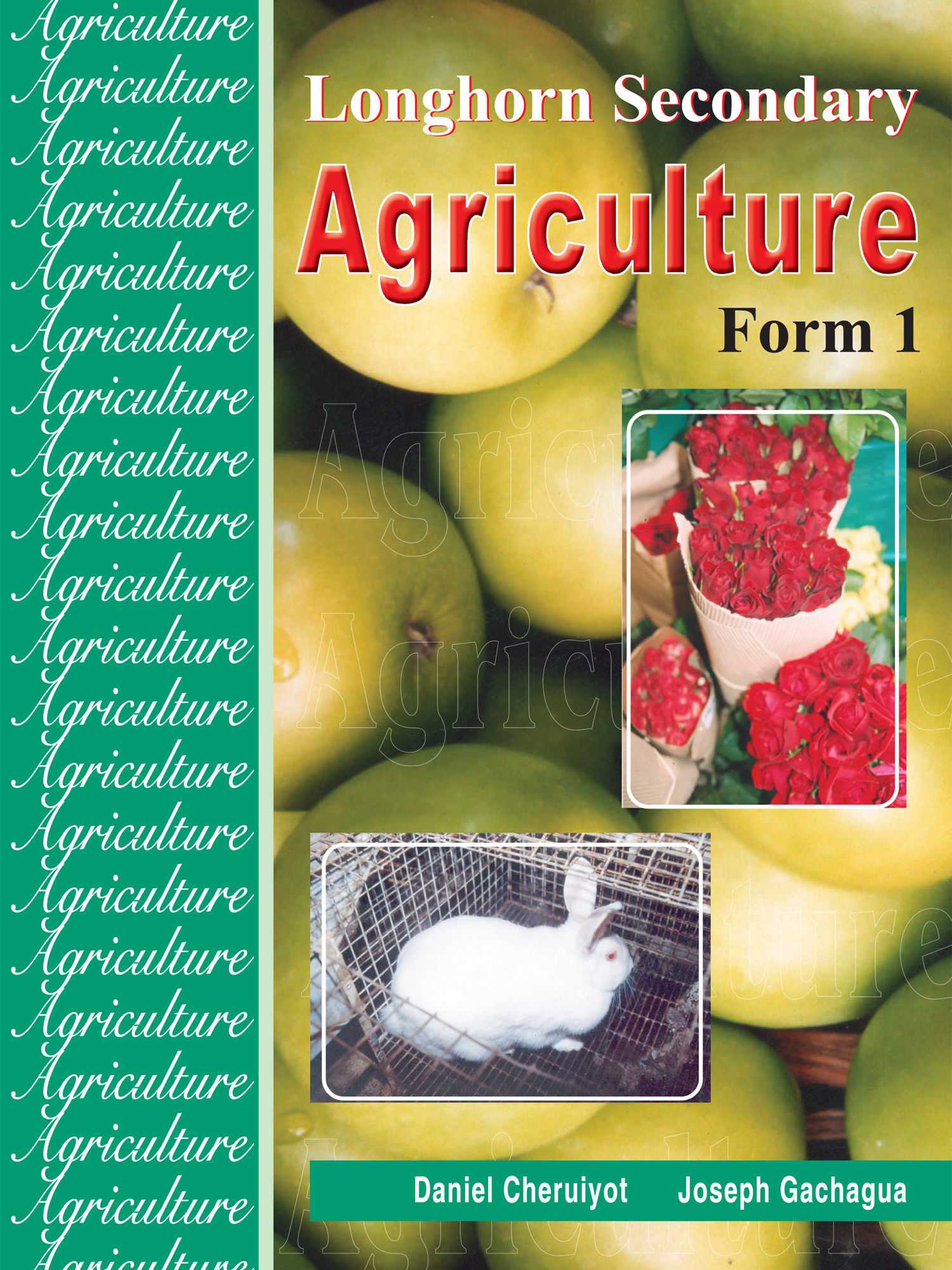
Longhorn Secondary Agriculture Form 1 is a new course that comprehensively covers and fulfils all the goals and targets of the new syllabus. The course underscores the crucial role agriculture plays as the mainstay of Kenya's economy and is uniquely designed to promote the best agricultural production principles and the respon-sible application of the latest environmentally sound technological advancements, giving it a competitive edge.
Other key features include:
• use of simple language with clarity, which is appropriate to the level of the learner.
• presentation of content sequentially and in well-organised topics. • use of numerous illustrations.
• practical activities for further investigation.
• revision questions to reinforce the understanding of agricultural principles and concepts.
• a comprehensive teacher's guide, providing, among other things, guidelines on how to teach the various concepts and answers to revision questions.
The authors of the book, Daniel Cheruiyot and Joseph Gachagua are experienced teachers and examiners of KCSE Agriculture.
The work has been moderated and improved by David Mwangi, Julius Mailu and Peter Sigei who are syllabus specialists and examiners of KCSE Agriculture.
1. Introduction to Agriculture
Lead |
Chapter |
|---|---|
| 1.1. |
Introduction to Agriculture
Free chapter! |
| 1.2. | Branches of agriculture |
| 1.3. | Systems of farming |
| 1.4. | Methods of farming |
| 1.5. | Role of agriculture in the economy |
2. Factors influencing Agriculture
3. Farm tools and equipment
4. Crop Production 1 (Land preparation)
Lead |
Chapter |
|---|---|
| 4.1. | Crop Production: Land preparation |
| 4.2. | Operations in land preparation |
| 4.3. | Primary Cultivation |
| 4.4. | Secondary cultivation |
| 4.5. | Tertiary operations |
| 4.6. | Minimum tillage |
5. Water supply, irrigation and drainage
Lead |
Chapter |
|---|---|
| 5.1. | Water supply, irrigation and drainage |
| 5.2. | Water supply |
| 5.3. | Conveyance of water |
| 5.4. | Water treatment |
| 5.5. | Irrigation: Importance and methods |
| 5.6. | Drainage |
| 5.7. | Water pollution |
6. Soil fertility (organic manures)
Lead |
Chapter |
|---|---|
| 6.1. | Soil fertility (organic manures) |
| 6.2. | Soil fertility |
| 6.3. | Organic matter. Organic manures (1): green manure, farm yard manure |
| 6.4. | Organic manures (2): Compost manure |
7. Livestock breeds
Lead |
Chapter |
|---|---|
| 7.1. | Livestock breeds |
| 7.2. | Livestock: Importance and cattle breeds |
| 7.3. | Sheep breeds |
| 7.4. | Goat breeds |
| 7.5. | Pigs |
| 7.6. | Poultry breeds |
| 7.7. | Camels and rabbits |
| 7.8. | Terms used to describe livestock |
8. Agricultural Economics
Lead |
Chapter |
|---|---|
| 8.1. | Agricultural Economics |
| 8.2. | Farm records (1) |
| 8.3. | Farm records (2) |
-
The study kit contains 53 chapters and 9 exercises of which 9 are in the chapters and 0 in the task exercises.
-
Authors
Daniel Cheruiyot, Joseph Gachagua -
Exercises kit’s authors
Daniel Cheruiyot, Joseph Gachagua -
Subject
Agriculture -
Grade
Form 1 -
Kit's language
English -
Publisher
Longhorn Publishers -
Included in packages