Introduction
Creative Arts refer to various forms of artistic expression that use imagination, skill and creativity. These arts express ideas through a variety of mediums to pass a message to the audience. Creative Arts encompass a wide range of mediums and disciplines such as Visual Arts.
Sports refer to organised, competitive and recreational activities that are often governed by rules and regulations. They can be physical, mental or a combination of both. Sports are played by both individuals or teams and are typically aimed at improving physical fitness, mental well-being and social interaction. An example of a sport is Swimming.
The roles of Creative Arts and Sports in society
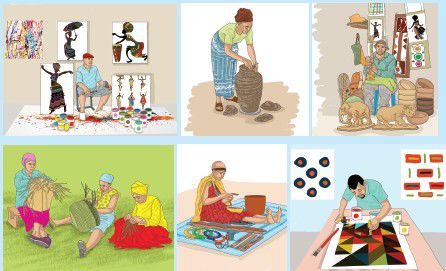
- Study the pictures.
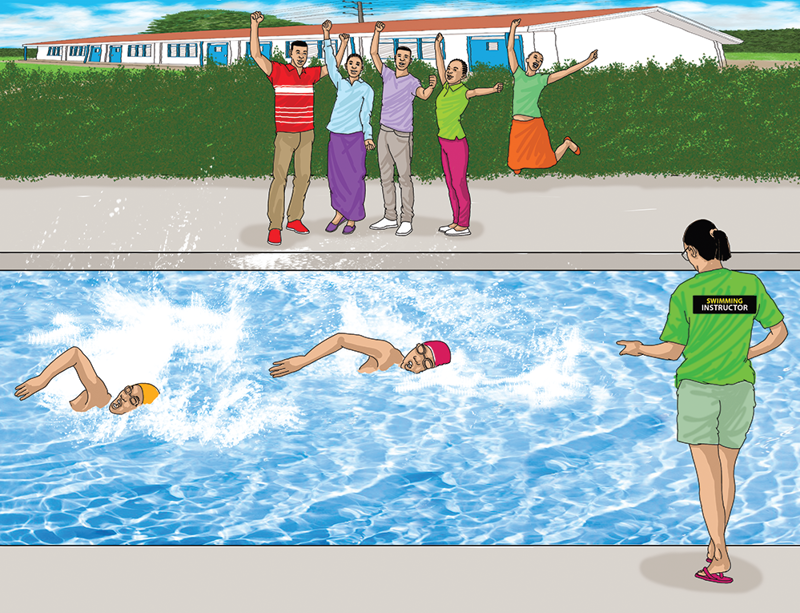 | 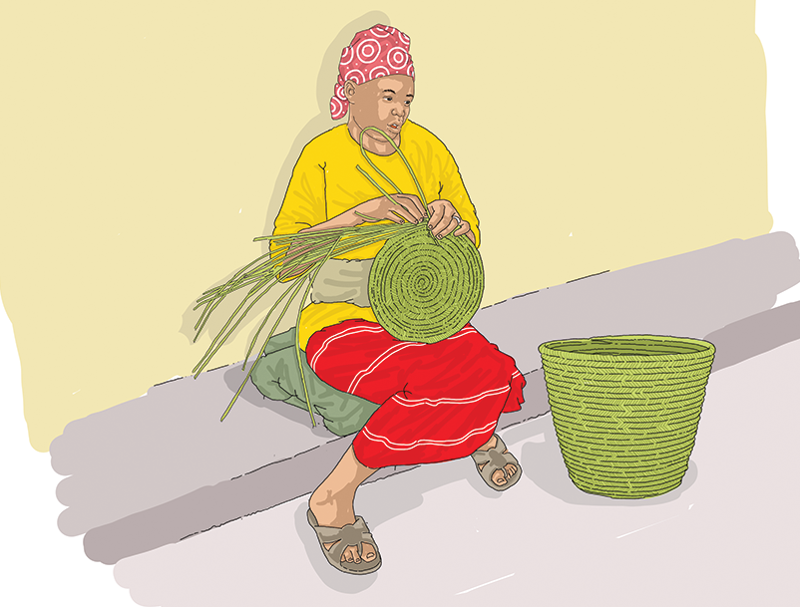 |
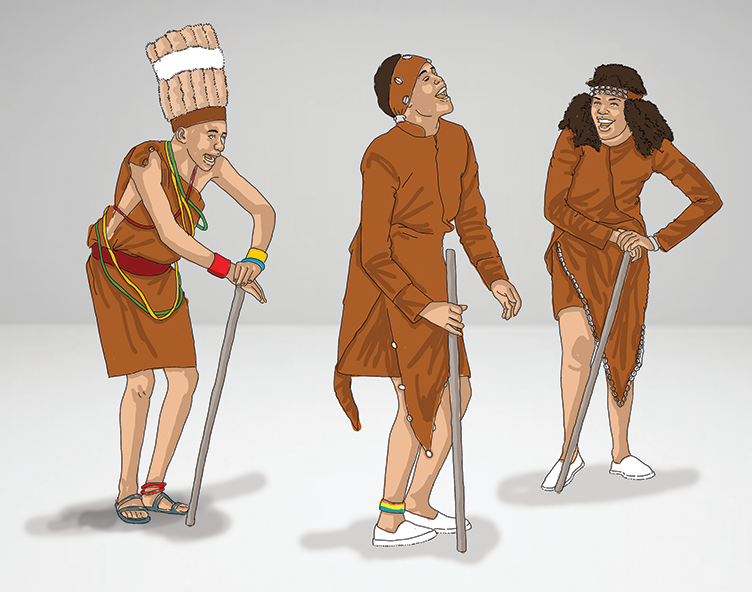 | 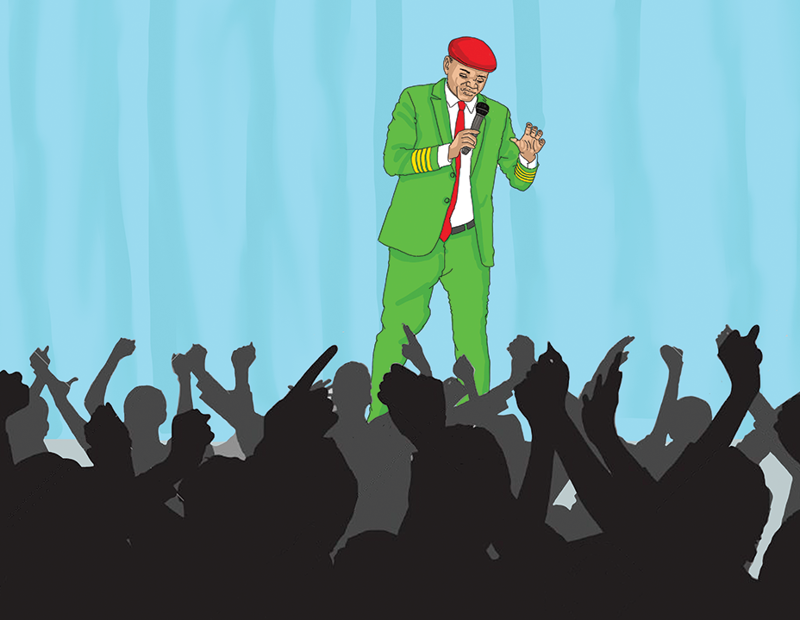 |
- What do you see?
- What are the roles of Creative Arts and Sports?
Get started
Creative Arts and Sports are forms of human expression. They are usually products of human creativity. They serve various functions in society. In this sub strand, we will study and appreciate the functions of Creative Arts and Sports in human life.
What is the importance of Creative Arts and Sports in society?
- Study the following picture.
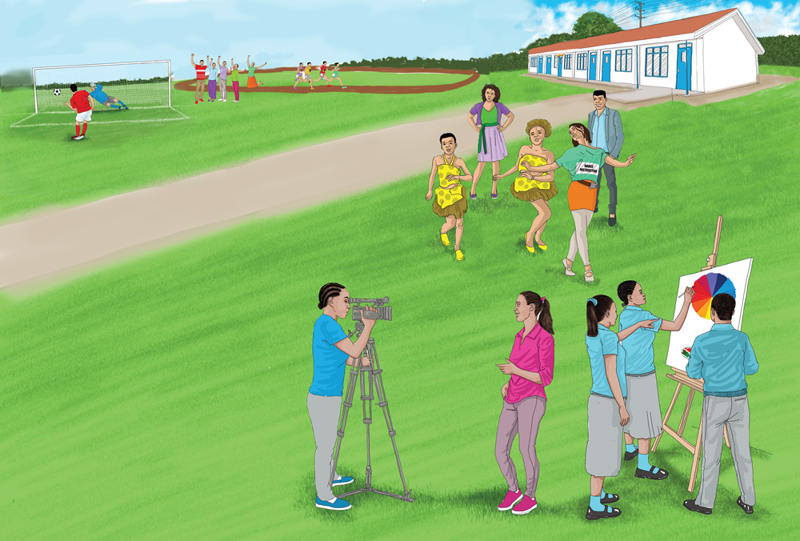
- Identify the forms of Creative Arts and Sports represented in the picture.
- Name other forms of Creative Arts and Sports that you know.
- Use a digital device or relevant print materials to search for information or watch videos on various forms of Creative Arts and Sports.
- Talk about how they are performed.
- Discuss the people involved.
- What do you think are the roles of Creative Arts and Sports? Discuss.
- Classify your findings into social and economic roles of Creative Arts and Sports.
- Social roles
- Economic roles
- Present your findings in class.
- Identify the various forms of Creative Arts and Sports in society.
- Discuss the functions of the following in society.
- Group the roles below as based on the function that helps to achieve it in society.
- Enhances physical wellness and fitness.
- Provides career opportunities.
- Provides career opportunities.
- Helps us know more about other people’s cultures.
- Promotes unity as people come together to watch games.
- Used in entertainment.
- Promotes tourism.
- Helps in culture preservation and transmission.
- Brings unity in the society.
- Helps in culture transmission and preservation when people play indigenous sports games.
- Talk about the social and economic roles played by Creative Arts and Sports in society guided by the following points:
- Cultural preservation and transmission
- Social integration
- Entertainment
- Careers
- Peace building
- Education
- Tourism
- Make notes from your discussion.
- Research on other functions that Creative Arts and Sports play in society.
Learning Corner
Creative Arts and Sports play different economic and social roles in society. Below is a summary of the social and economic roles of Creative Arts and Sports.
Social roles
- Preservation and transition of culture: For example, folk dance preserves cultures of the past and passes them on to the next generations. The same applies to indigenous sports such as tagging.
- Education: Sports and Creative Arts can teach us the ways of life of other communities apart from our own. They can help us know more about new places.
- Entertainment: Creative Arts and Sports are used for entertainment and amusement in society.
- Unity: Creative Arts and Sports promote unity in society. Activities such as swimming games, drama festivals and painting exhibitions, among others, bring people together.
- Create a sense of identity: Creative Arts and Sports bring people together, creating shared experiences that help to foster a sense of community and collective identity.
Economic roles
- Careers: There are different careers associated with Creative Arts and Sports. We have career sportsmen, sportswomen and creative artists, among others. We can earn a living from Creative Arts and Sports or from activities related to them. Professionals in Creative Arts and Sports include artists, musicians, referees, sports coaches, sports doctors, choreographers, trainers and teachers, among others.
- Promote tourism: Different forms of Creative Arts and Sports encourage tourism. This happens when people visit places to participate in or watch sporting events and Creative Arts activities. Tourism promotes capital gain in society.
- Through Creative Arts and Sports, a country can earn or generate tax revenue.
- Creative Arts and Sports attract investments which in turn increase job opportunities.
- Identify any major sporting, arts, drama or music event that happened in any country or continent in the world.
- Describe the functions that the arts, drama, music or sporting event you have identified served in the lives of the people of that country or continent.
Make a storyboard highlighting the roles of Creative Arts and Sports in society
Get started
A storyboard is a visual representation that organises and sequences illustrations or images to tell a story or convey information. In the context of highlighting the roles of Creative Arts and Sports in society, a storyboard serves as a powerful tool to visually showcase how these activities impact and enrich communities. We are going to make storyboards based on various forms of Creative Arts and Sports.
- Study the following pictures.
- What is happening?
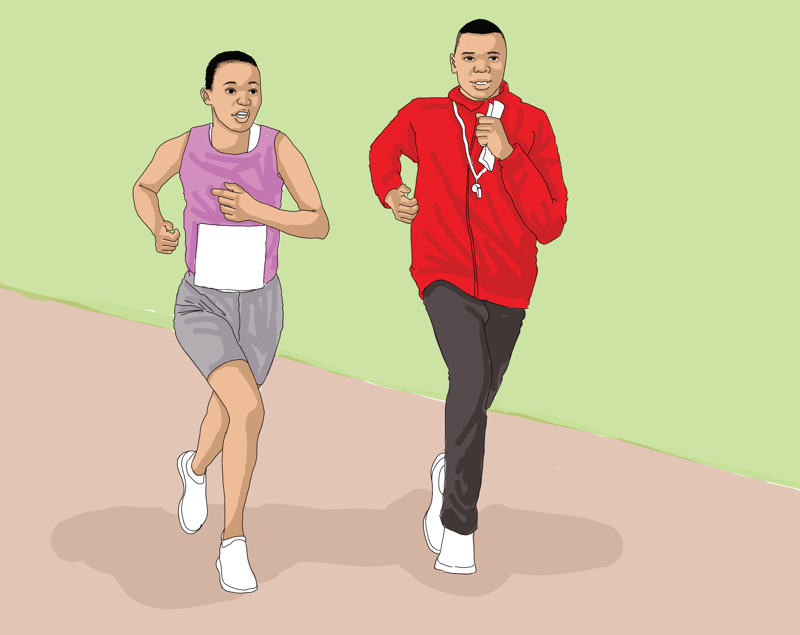
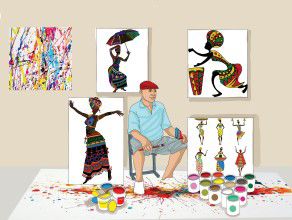
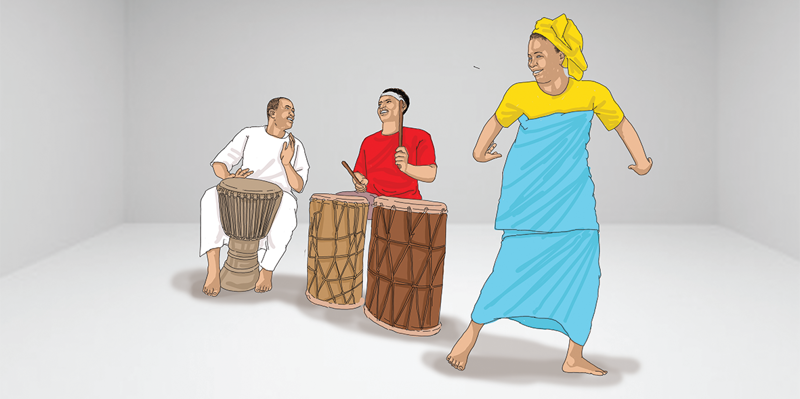
- Take a walk around the school and find pictures that represent various Creative Arts and Sports activities.
- Choose the description that best illustrates the roles displayed on the pictures.
- Running
- Painting
- Dancing
- Carefully cut out the selected pictures.
Activity 4: Work in groups
Materials needed:
- Prepared surface
- Water-based paints (green and red)
- Paintbrushes (various sizes)
- Used toothbrush or palette knife (optional)
- Water
- Palette or paper plate for mixing paint
Procedure:
- Prepare the mounting surface. Ensure it is clean and dry.

- Mix a light green water-based paint with water to create a diluted wash.
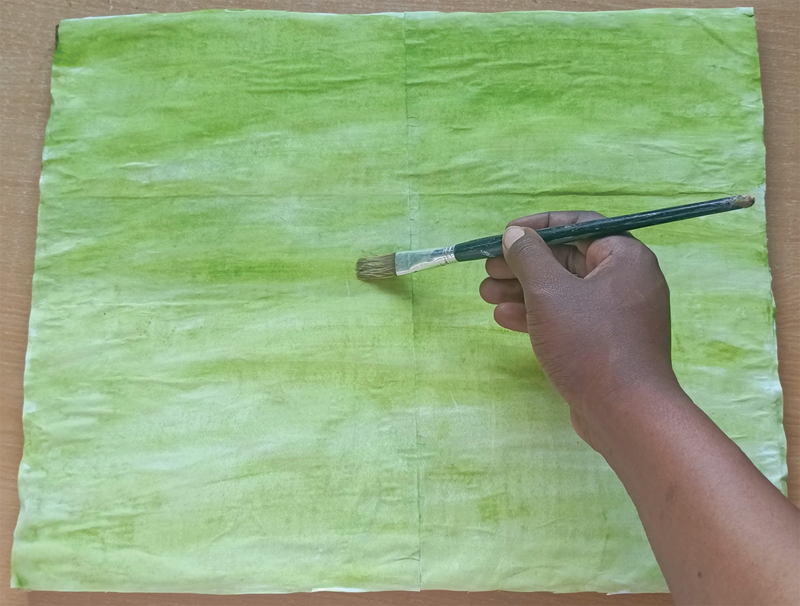
- Using a large paint brush, apply the green wash to the entire surface, covering it evenly.
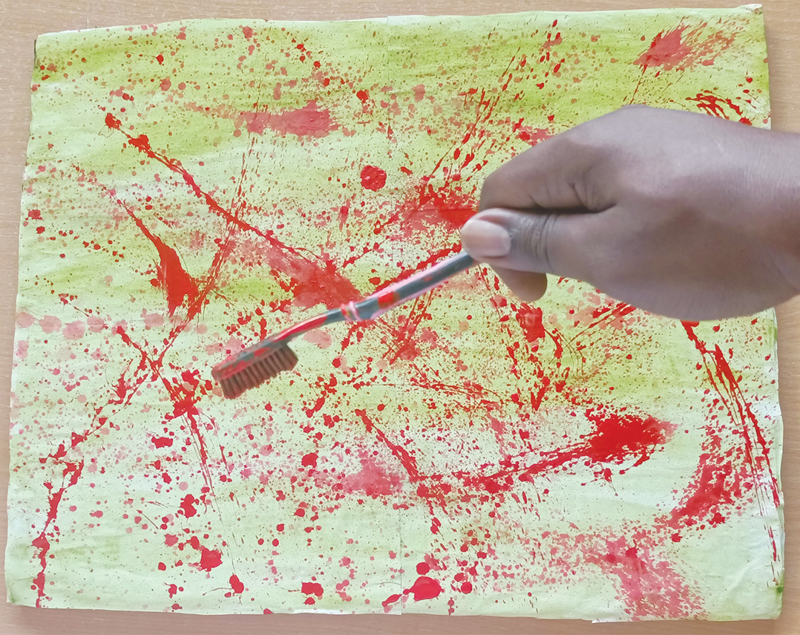
- Dip a used toothbrush into the red paint. Hold it over the surface and flick it along the surface to create a fine mist of red paint splatters.
Vary the pressure and direction of the strokes to create different effects.
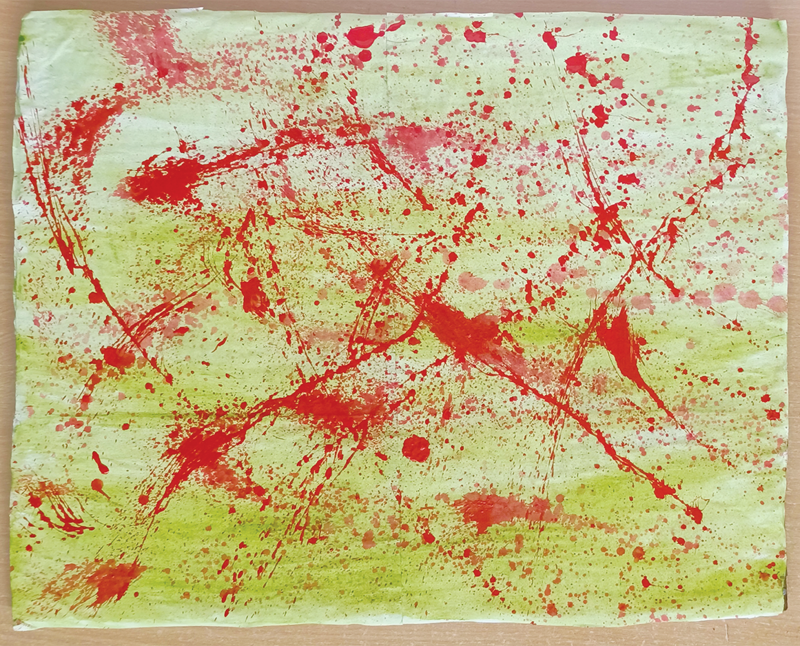
- Allow the painting to dry completely before handling.
Learning corner
- Splattering technique
Splattering is a painting technique where paint is forcefully applied to a surface, creating a random and textured effect. This can be achieved using various tools, such as:
- Toothbrush: By running a finger across the bristles of a paint-loaded toothbrush, a fine mist of paint can be sprayed onto the canvas.
- Brush: By flicking a brush loaded with paint, larger splatters can be created.
- Palette knife: Larger, more expressive splatters can be achieved by flicking a palette knife loaded with paint.
Splattering is often used to add energy, depth and a sense of movement to a painting. It can also be used to create interesting backgrounds or textures.
- Wash technique
Wash is a painting technique that involves diluting paint with water to create a transparent or semi-transparent layer. This technique is commonly used to create soft, atmospheric effects or to lay down a base layer for subsequent painting.
The amount of water added to the paint determines the intensity of the wash. More water results in a lighter, more transparent wash, while less water creates a more opaque wash.
Wash techniques can be used to create:
- Gradients: By gradually adding more or less water to the paint, smooth gradients can be achieved.
- Atmospheric effects: Washes can be used to create the illusion of distance or mist.
- Underpainting: A wash can be used as a base layer for subsequent layers of paint, providing a subtle foundation for the final painting.
What to consider when painting using both splatter and wash techniques of painting
- Choose colours that contrast the colour of your wash during splattering. For example, if you use a blue wash, you could use orange or yellow splatters. If you use a yellow wash, you could use blue or purple splatters.
- Use different shades of the same colour for your splatters. This will create a cohesive and harmonious look.
- Experiment with different amounts of water in the wash to achieve various shades and intensities.
- Use different sized brushes and techniques to create a variety of splatters and streaks.
- Consider layering additional colours or splatters for more complexity.
- Protect your workspace with newspaper or a drop cloth to avoid paint splatters.
Activity 5: Work in groups
Assemble the following materials:
- Mounting surface from Activity 4
- Scissors
- Glue
- Markers or coloured pencils (optional)
Steps
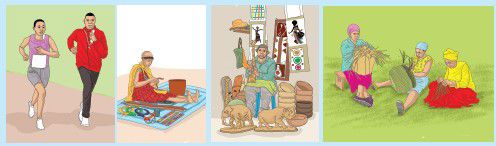
- Collect a variety of pictures that depict different aspects of Creative Arts (Visual Arts, Music and Dance, Theatre (Drama) and Film and Sports.
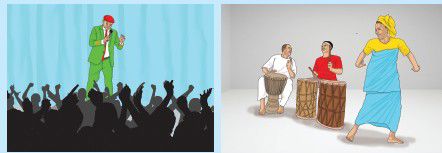
Ensure the pictures showcase both social and economic roles. For example, a picture of a musician performing live highlights the social role of entertainment, while a picture of an artist selling his or her work showcases the economic role of creative industries.
a)
b)
c)
- Sort the pictures into categories based on social and economic roles. For example, you might have categories like:
- Social roles: Entertainment, cultural expression and community building, among others.
- Economic roles: Employment, income generation or tourism.
- Stick the photographs on the mounting surface using the following guidelines.
- Experiment with different layouts to create a visually appealing and informative storyboard.
- Consider the sizes and shapes of the pictures as well as and how they will fit together on the board.You might want to create a grid or use a template to help you organise the pictures.
a)
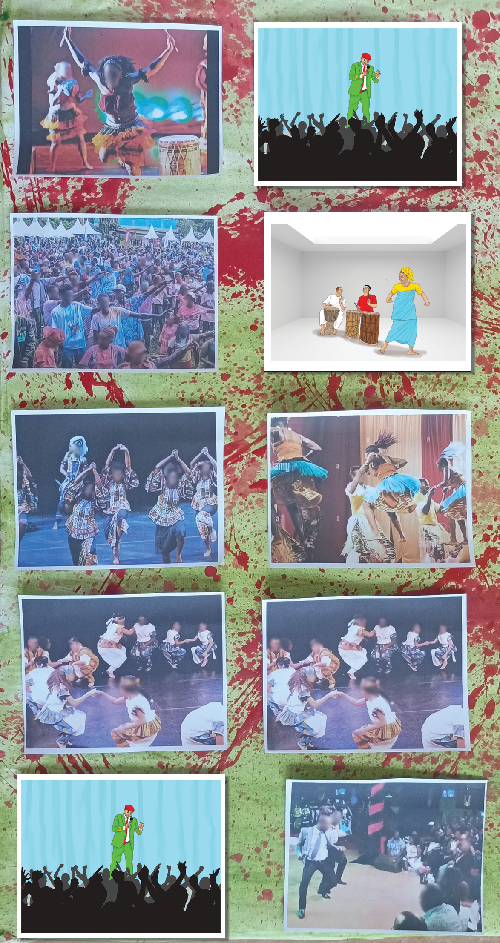
b)
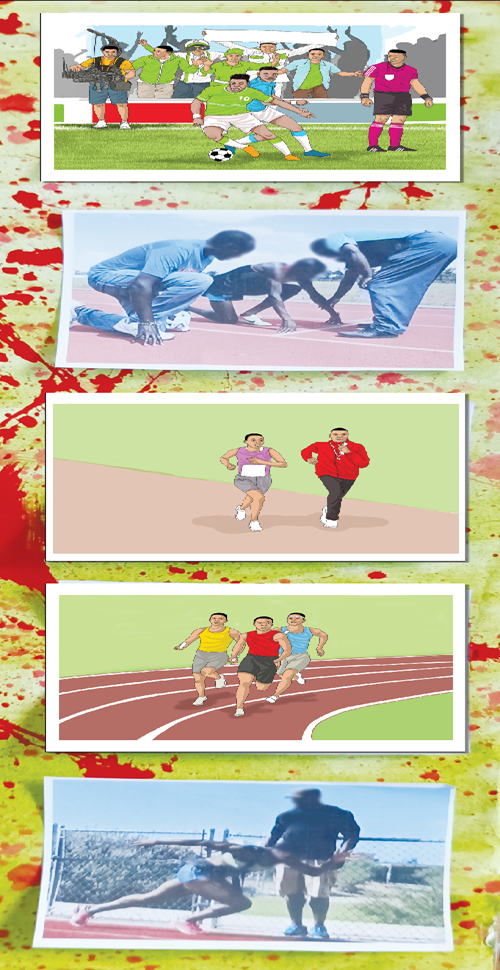
c)
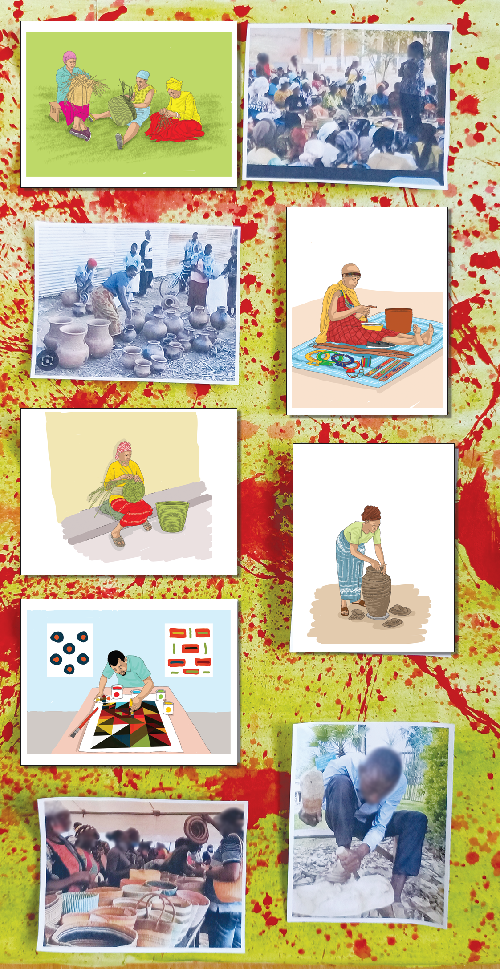
Learning Corner
Description of social and economic roles of Creative Arts and Sports using the storyboard.
Creative Arts and Sports
- Social roles
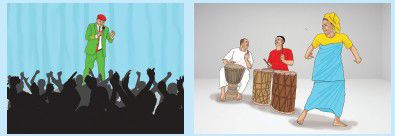
- Cultural identity and heritage: The music and dance performances, indigenous instruments and traditional costumes showcase the rich cultural heritage of the community. They help preserve traditions and strengthen a sense of identity.
- Community building: Music and dance performances and shared musical experiences foster a sense of belonging and connection among community members.
- Inter-generational bonding: People from different age groups working together to learn and master skills highlights the transmission of cultural knowledge and skills across generations.
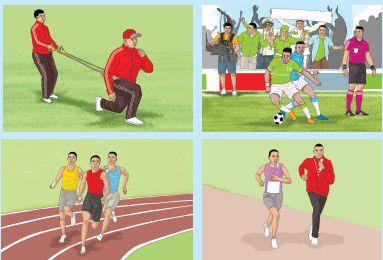
- Health and well-being: The various sports activities depicted, such as running and traditional games, promote physical and mental health.
- Community cohesion: Sports events and competitions can bring people together, fostering a sense of unity and shared purpose.
- Youth development: Sports can provide opportunities for youth development, teaching values like teamwork, discipline and fair play.
- Economic roles
- Livelihoods: The image of pottery making suggests that Creative Arts can provide sustainable livelihoods for artisans and crafts people.
- Tourism and cultural exchange: The vibrant performances and cultural displays can attract tourists, contributing to the local economy and fostering cultural exchange.
- Market for crafts: The image of pottery being sold indicates that Creative Arts can generate income through the sale of crafts and artworks.
- Employment and business opportunities: Sports events can create jobs in various sectors, including hospitality, transportation and media.
- Tourism and revenue generation: Major sporting events can attract tourists, boosting local economies.
- Sports industry: The image of athletes competing suggests the potential for a sports industry, including coaching, sports equipment manufacturing and sports management.
Tips
- Use a variety of image sources to create a diverse and interesting storyboard.
- Consider the colour scheme of your images and the background to create a visually appealing composition.
- Use a mixture of large and small images to create visual interest.
Activity 6: Work in groups
- Make a storyboard in which you bring out the roles of Creative Arts and Sports in society.
- Present your work in class for feedback. Arrange the storyboards for easy viewing.
- Prepare the class for showcasing the storyboards.
- Allow time for everyone to view each storyboard.
- Take turns in commenting about own and others’ work.
Extended activity
Create a digital version of the storyboard.
Learning Corner
A storyboard is a visual representation of a sequence of events, often used in the planning and development of a project. It is a series of illustrations or images displayed in sequence for the purpose of pre-visualising a motion picture, animation, motion graphic or interactive media sequence. Storyboards are essential tools in the creative process, particularly in film, television, advertising and multimedia production. Here are the key components and purposes of a storyboard:
- Frames
- Images
- Text descriptions
- Annotations such as camera angles, lighting, special effects and sounds
A good storyboard should:
- Clearly convey the intended message
- Capture and hold the viewer’s attention
- Have elements that are well-organised and related to the main theme
- Show originality and artistic flair
- Provide valuable information or insights.
Storyboards are used in the following areas:
- Film and animation: Planning scenes and sequences.
- Advertising: Conceptualising campaigns.
- Education: Visual aids for teaching complex concepts.
- Business: Outlining project plans or presentations.
- Event planning: Visualising event layouts and activities.
- Describe the role of Creative Arts in society.
- Innovation and Problem-Solving
- Civic Engagement and Social Change
- Mental Health and Well-being
- Economic Contribution
- Social Cohesion and Inclusion
- Collaboration
- Explain how Sports can promote economic and social activities.
- Create a mini storyboard illustrating the benefits of Creative Arts and Sports to your community.
- Analyse the impact of a famous sports event on society.
The role played by Creative Arts and Sports in society
Storyboard Activity
Create a visual storyboard bringing out the social and economic roles of Creative Arts and Sports in society.
Materials needed:
- Paper or digital drawing tools
- Markers, coloured pencils or digital art tools
Instructions:
- Discuss the social and economic roles of Creative Arts and Sports in society.
For example:
- Create a sense of identity and community
- Promote cohesion and teamwork
- Preserve culture and traditions
- Provide entertainment
- Generate employment and income
- Contribute to economic growth
- Plan out a 6 to 8 panel storyboard that visually depicts the various roles of Creative Arts and Sports you have identified.
- Create your storyboard panels. Draw the illustrations or use
digital art tools. Focus on one specific role at a time. Use images,symbols and captions to convey the idea. - Present your work in class for review and feedback. You can present your feedback on a table like the one below.
| Yes | No | Comment |
|
| ||
|
- Discuss what you learnt about the importance of Creative Arts and Sports in society.
- Discuss how this activity has helped you appreciate these roles.
Self-check corner
Outline the functions that Creative Arts and Sports serve in society.
Authentic task
In this activity, you are required to carry out fieldwork in your locality to collect information on the role of Creative Arts and Sports in society.
This activity can be completed in the course of two weeks. At the end of it, you should submit a report to your teacher. In the course of the task:
- Assemble all the materials and equipment you need for the exercise. These may be cameras and writing materials.
- Seek permission where necessary before the main visit.
- Seek help from resource persons where needed.
Concept | Yes, I can | I need more practice |
I can describe the roles of Creative Arts and Sports in society. | ||
I can make a storyboard highlighting the roles of Creative Arts and Sports. | ||
I appreciate the role played by Creative Arts and Sports in society. | ||
Write down the areas you need to practise and seek help from your teacher or classmates. | ||